
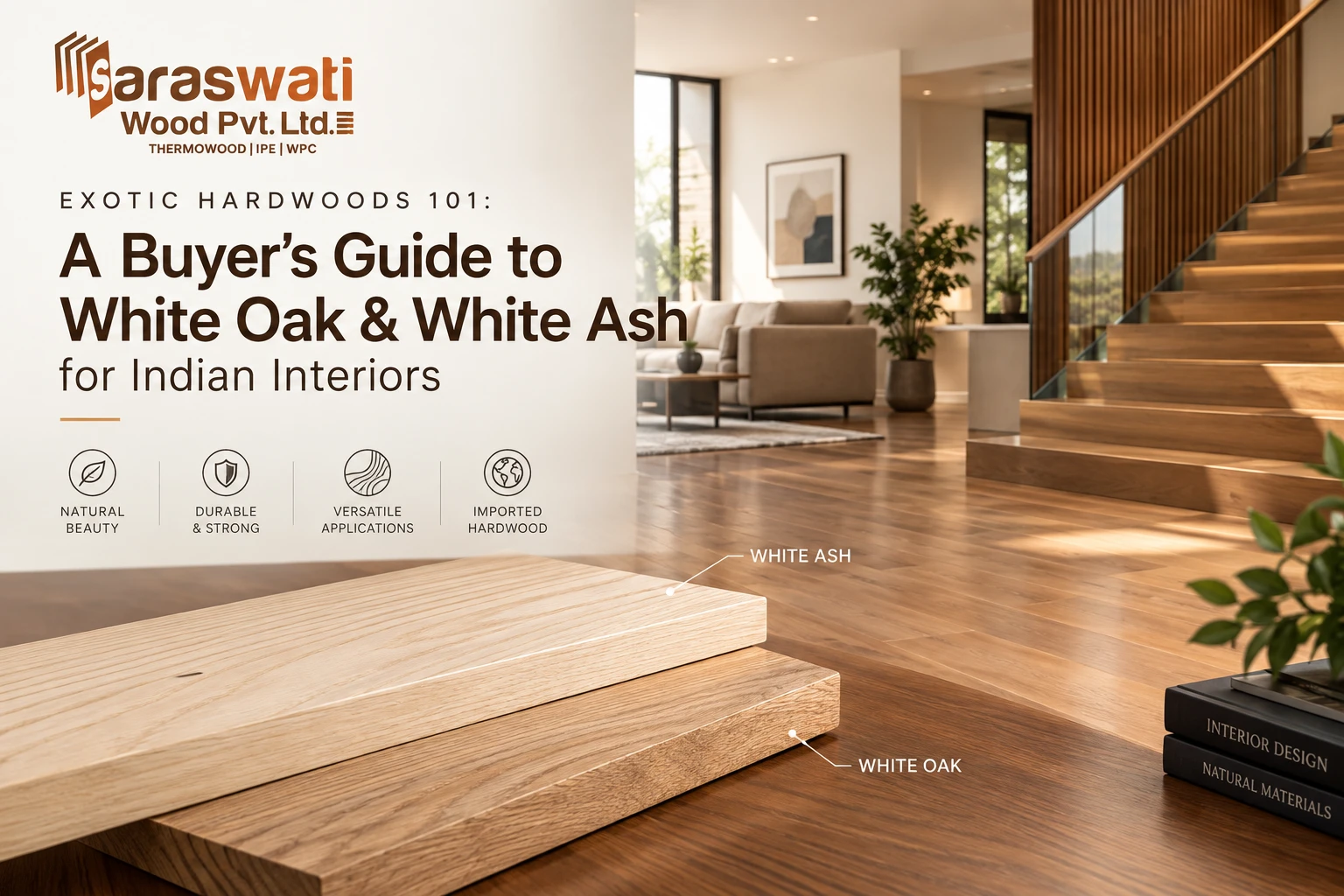
Exotic Hardwoods 101: Buyer's Guide to White Oak & White Ash for Indian Interiors
Walk into a design consultation for a premium residence or hospitality interior today, and White Oak or White Ash is likely somewhere on the mood board. Both have earned their place in high-end Indian interiors, flooring, staircases, wall panelling, and statement furniture, but the two are frequently confused, and buyers often commit to one without understanding what actually separates them.
White Oak is a North American and European hardwood prized for its close, straight grain and a Janka hardness rating of around 1360, making it noticeably harder and more durable than red oak, which sits closer to 1290. That density translates directly into resistance against dents and daily wear, which is exactly why White Oak dominates flooring and staircase specifications in projects that need to withstand heavy foot traffic over decades. Its tone runs from warm honey to a light tan, and it takes stains and finishes evenly, giving designers a wide range of final looks from a single species.
White Ash brings a different set of strengths. Its grain is more pronounced and pale, running from cream to light brown, giving interiors a brighter, more contemporary look than the warmer tones of oak. Ash is also known for its excellent strength-to-weight ratio and flexibility, properties that historically made it a favourite for furniture and fittings that need to handle stress without excess bulk, think staircase handrails, curved panelling, or statement furniture pieces where the material needs to bend or flex slightly without compromising strength.
For high-traffic flooring and surfaces where long-term wear resistance matters most, White Oak's superior density gives it the edge. For furniture, detailing, and interiors where a lighter, more contemporary tone and flexibility are the priority, White Ash is often the better fit. Many premium interiors use both, White Oak underfoot and on staircases, White Ash on furniture and feature panelling, unified by a similar pale, natural material language across the space.
The biggest risk in buying White Oak or White Ash isn't the species, it's the supplier. Before you commit, ask:
Kiln drying and moisture stabilization - both species move if improperly dried for Indian humidity, so confirm this happened before the timber reached you.
Grading - visible grain, knots, and colour consistency vary between grades even within the same species.
Sourcing - India now imports both species at scale, so reputable, documented supply chains exist and are worth insisting on.
Exotic hardwood quality varies significantly by source, and getting these three right is what separates a good spec sheet from a good interior.
Saraswati Wood Private Limited has built its reputation as one of India's established importers of premium timber, bringing in wooden flooring and hardwood species, White Oak and White Ash included, sourced and kiln dried to perform in Indian interiors. For architects and designers specifying exotic hardwood, working with an importer who understands both the material and the climate it needs to survive makes the difference between a beautiful spec sheet and a beautiful, lasting interior.