
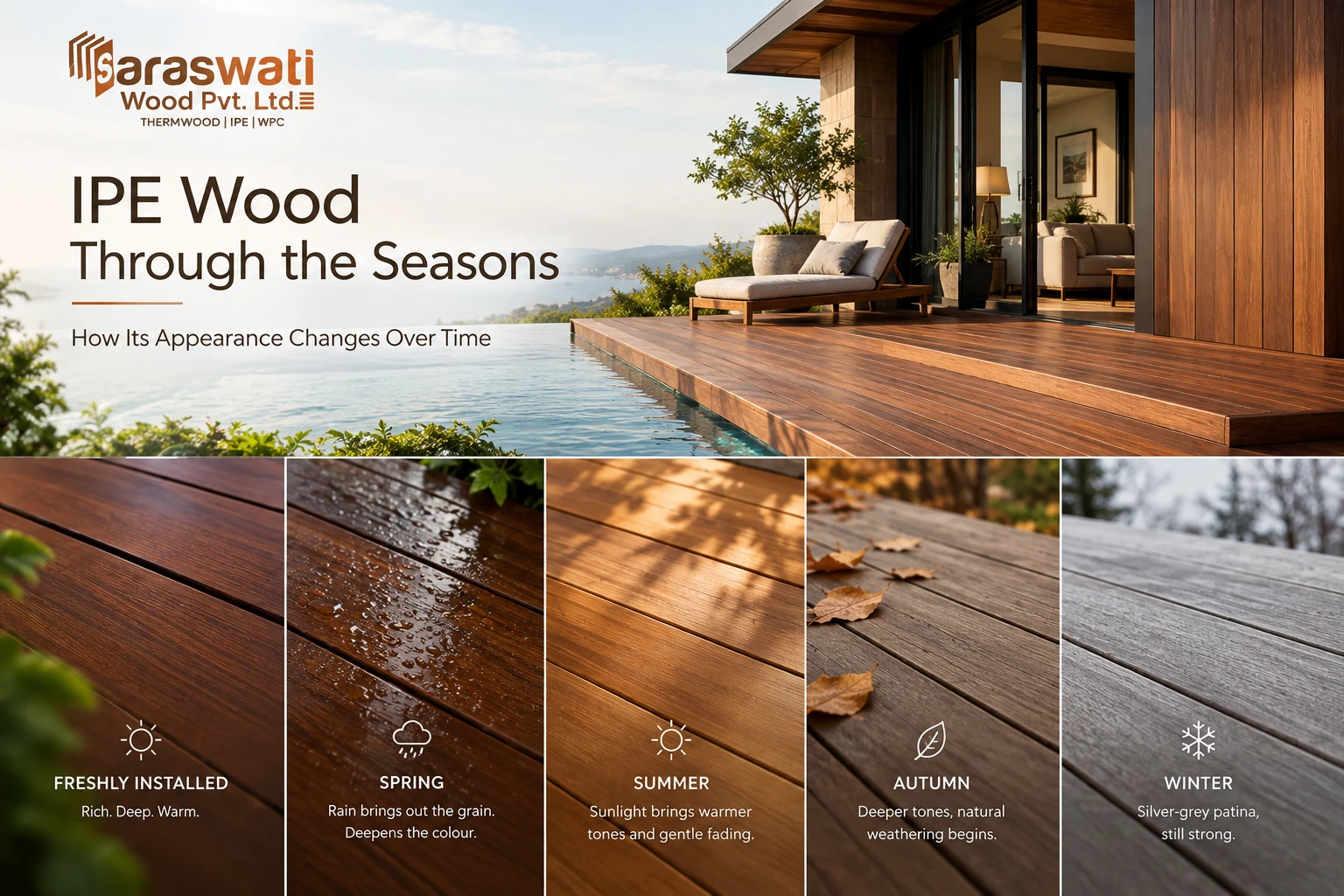
IPE Wood Through the Seasons: How Its Appearance Changes Over Time
Very few timbers reward patience quite like IPE; dense, hard-wearing and naturally rich in colour, IPE has long been valued for outdoor applications where timber needs to withstand sun, rain and changing temperatures. IPE wood changes across seasons and over the years, as its colour and surface gradually respond to sunlight, moisture, weather and maintenance. Understanding that transformation helps one to decide whether they want to preserve its original warmth or allow it to develop its natural silver-grey patina.
The Starting Point
Freshly installed IPE wood is immediately recognisable as its colour can range from deep brown to warmer reddish, olive or golden-brown tones, depending on the board. The grain is generally fine and close, with a natural richness that can give a new deck or facade a remarkably finished appearance. This is IPE at its most saturated. But outdoor timber is never completely static, because once it is exposed to the elements, the surface begins its gradual transformation.
Spring, Where Rain Brings the Grain Back to Life
After months of cold weather, spring rain can temporarily deepen the appearance of IPE. When the boards are wet, their colour becomes richer and the grain appears more pronounced. Rain also helps wash away accumulated dust and surface debris, giving the timber a cleaner appearance. Spring is therefore a good moment for a gentle seasonal clean, removing pollen, dirt and organic debris before the warmer months arrive which can help the surface weather more evenly.
Summer, Where Sunlight Begins Its Work
Summer is when the transformation becomes more visible. Ultraviolet exposure gradually breaks down compounds at the timber's surface, causing untreated IPE to lose some of its original deep brown colour. Over time, warmer brown and honey tones begin to emerge. The change is rarely perfectly uniform. Boards exposed to full sun will generally weather faster than those beneath shade, which can create subtle variations across a deck, facade or outdoor structure. Summer can also bring small surface checks, such as fine cracks that occur as the timber responds to changes in moisture and temperature. These are common in dense exterior hardwoods and are generally a surface phenomenon rather than an indication of structural failure. For those who want to retain more of IPE's original colour, this is also the point where a suitable UV-protective exterior oil can become part of the maintenance routine.
Autumn, A Softer, More Weathered Character
As temperatures fall and moisture levels rise, IPE begins to take on a quieter appearance. The timber may appear deeper in tone when damp, while fallen leaves and organic matter can leave temporary marks if they remain on the surface for extended periods. A simple habit of keeping the surface clear makes a noticeable difference. Regular sweeping prevents leaves and debris from trapping moisture against the timber and helps the surface weather more evenly. For homeowners who maintain the original brown tones with oil, autumn can also be a useful time for cleaning and preparing the timber for the wetter months ahead.
Winter - Weathered, but Resilient
IPE handles demanding outdoor conditions remarkably well. Cold temperatures, moisture and seasonal changes have little effect on its overall durability compared with many other timbers. During winter, however, the surface may appear more muted, particularly when exposed to prolonged moisture, frost or overcast conditions. Much of this change is cosmetic. The timber's natural density and durability allow it to continue performing outdoors even as its surface appearance evolves. That said, harsh chemical de-icers and aggressive cleaning methods are best avoided. Like any natural timber surface, IPE benefits from being maintained with the right products and a measured approach.
Two Ways to Let IPE Wood Age
Over time, an IPE surface generally moves towards one of two aesthetic directions.
Let it weather naturally.
With continued exposure to sunlight and weather, the rich brown gradually fades towards a softer silver-grey. This is a surface transformation, the timber beneath remains durable and capable of performing for decades. For many designers and homeowners, this weathered patina is part of IPE's appeal. It gives the material a quieter, more architectural character as it settles into its surroundings.Maintain the original warmth.
If you prefer IPE's deeper brown tones, regular maintenance with an appropriate exterior oil containing UV protection can slow the visible weathering process. The frequency depends on factors such as exposure, climate and the product used, but exterior IPE generally requires periodic maintenance rather than a one-time treatment. Neither approach changes what makes IPE valuable. One simply allows the material to tell the story of its exposure to the elements; the other keeps a closer hold on its original character.
A Material That Changes Without Losing Its Strength
That is perhaps the most interesting thing about IPE. Its appearance evolves, but its fundamental qualities remain. The deep brown of a newly installed deck, the warmer tones that emerge under summer sun and the soft silver-grey of a naturally weathered surface are all different stages of the same material. So when specifying IPE for an outdoor space, the question is not only, What colour do I want today? It is also: How do I want this timber to look five years from now? Because with IPE, aging is not simply something that happens to the material, it becomes part of the design.
Bring IPE Into Your Outdoor Spaces With Saraswati Wood
Choosing IPE is not simply about selecting a durable timber; it is about deciding how you want your outdoor space to age. Whatever your preference be, the right specification and maintenance approach can help the timber perform beautifully over time. At Saraswati Wood, we offer premium IPE wood for outdoor applications where durability, natural character and long-term performance matter. From IPE decking to facades and other exterior applications, our team can help you select the right timber for your project and understand how it will evolve with exposure to the elements.
Whether you are an architect designing an outdoor space, a landscape designer working on a deck or an interior and exterior designer specifying materials for a larger project, we can help you make the right choice. Explore the Saraswati Wood IPE collection or get in touch with our team to discuss your project and request a quote.