
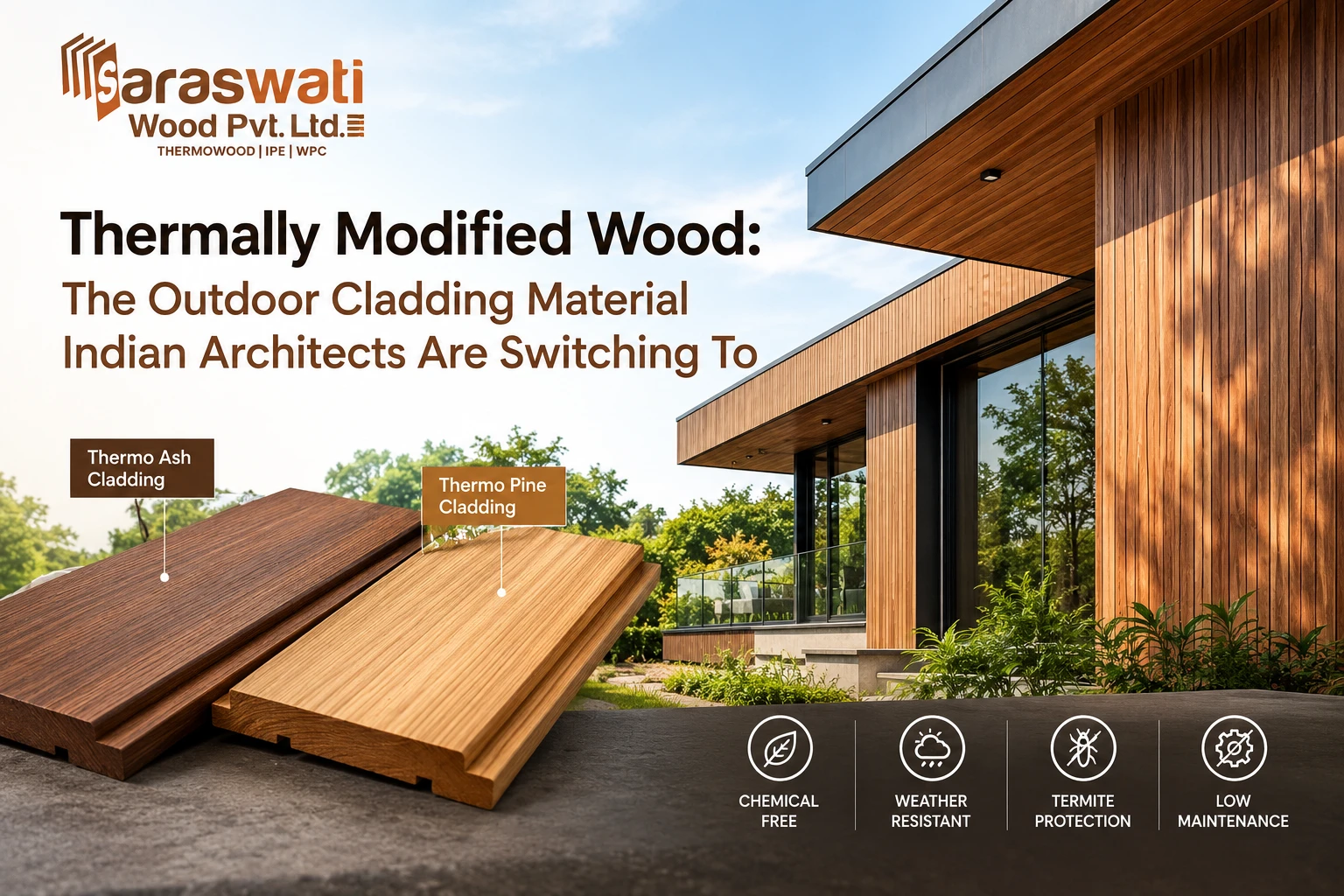
Thermally Modified Wood: The Outdoor Cladding Material Indian Architects Are Switching To
Ask an architect what they specified for exterior cladding five years ago, and the answer was probably teak, a chemically treated softwood, or Wood Plastic / Aluminium Composite Panels. Ask the same question today, and increasingly, the answer is thermally modified wood. This isn't a passing preference, it reflects a real shift in what clients and building codes are demanding from facade materials: durability without chemical treatment, natural aesthetics without teak's price tag, and performance that holds up in India's climate without constant upkeep.
Thermal modification process heats timber in a low-oxygen kiln using only heat and steam, no chemical preservatives involved. The process permanently alters the wood's cell structure, driving out moisture and improving resistance to rot, insects, and dimensional movement. What's left is a material that behaves like a premium tropical hardwood in terms of stability and weather resistance, without a synthetic treatment that degrades over the years. Two species dominate the thermally modified cladding specs currently going up across Indian commercial and residential projects. Thermo Ash cladding is the denser of the two, with a tight grain and a deep brown tone that reads as premium on street-facing elevations, closer in character to teak than to a softwood. Thermo Pine cladding is lighter, faster to install across large surface areas, and more economical, making it the practical choice for soffits, screening, and secondary elevations where coverage matters as much as finish.
Hospitality projects need guest-facing exteriors that look elevated without high maintenance costs. Commercial developments increasingly treat facades as brand statements, and residential architecture in coastal, high-humidity regions can't rely on chemically treated softwood that simply doesn't hold up. In each case, the driver is the same: clients want a natural material finish that doesn't come with a five-year maintenance clock attached.
At Saraswati Wood Private Limited, we supply Thermo Ash and Thermo Pine cladding, engineered for India's climate, helping architects specify a facade material that meets both the aesthetic brief and the durability brief without compromise.